

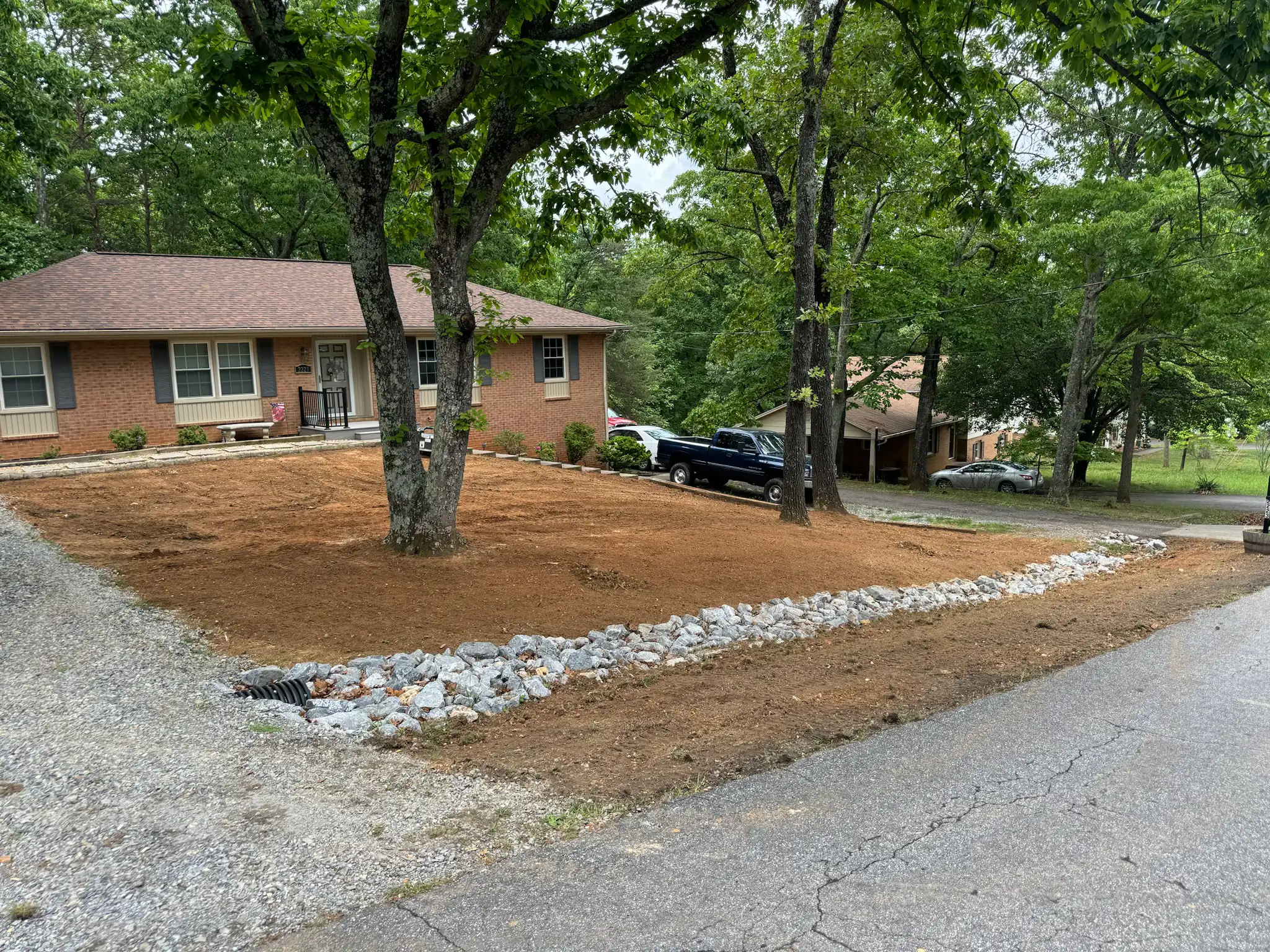
Grading & Land Leveling in Roanoke, Virginia
Rough grading, finish grading, lot leveling, slope correction, and drainage grading for residential and commercial properties across Roanoke and Roanoke County / City of Roanoke.
Grading that accounts for Roanoke's clay and water
Grading in the Roanoke Valley is fundamentally a water management problem. The Cecil red clay that covers most of this area holds moisture rather than absorbing it, which means every graded surface needs to actively direct water somewhere — toward a swale, a drain inlet, or a natural low point. If you grade to "flat," you get standing water. If you grade too aggressively on a slope, you get erosion. The margin for error is narrower here than in areas with permeable soils.
The challenge compounds on older properties. In Raleigh Court, where most homes went up in the 1940s and 1950s, the original grading has settled and shifted over decades. Low spots develop against foundations. Backyard slopes reverse direction. Driveways lose their crown. The result is water pooling where it shouldn't — against basement walls, under crawl spaces, or in the middle of the yard. Regrading these properties means reading the existing terrain, understanding where water is going now versus where it needs to go, and reshaping accordingly.
In newer subdivisions around Cave Spring, the challenge is different: builders finish-grade to the minimum spec, and within a few years the clay settles unevenly. We do a lot of corrective grading in these neighborhoods — re-establishing drainage swales that have gone flat, building up low spots along foundations, and creating proper transition slopes between properties. In Garden City and other low-lying areas near the valley floor, the water table is close to the surface, which limits how much we can cut and requires careful slope planning to prevent seasonal ponding.
Service details
Grading services in Roanoke
The full range of grading and leveling work we handle across Roanoke and the surrounding area.
Rough Grading
Initial earthwork to establish the basic contours of a site — cut-and-fill operations, building pad preparation, and drainage swale creation. Sets the foundation that everything else builds on, critical to get right in Roanoke's clay before it absorbs moisture and becomes unworkable.
Finish Grading
Precision grading to final elevations for sod, seeding, hardscape installation, or concrete work. Tight tolerances on slope percentage to ensure proper drainage across the clay's low-permeability surface, where even a half-percent grade difference determines whether water flows or pools.
Lot Leveling & Slope Correction
Regrading established properties where settling, erosion, or original poor grading has created drainage problems. Common on Raleigh Court and Garden City properties where decades of clay movement have reshaped the original terrain.
Drainage Grading
Reshaping terrain specifically to solve water management problems — redirecting runoff away from foundations, creating overland flow paths, and establishing swale grades. Often paired with French drains or catch basins on Roanoke properties where grading alone can't resolve concentrated flow.
Grading projects near Roanoke
Recent grading and leveling work from across the Roanoke area.
Backyard Regrade & Drainage Fix
Raleigh Court, VA
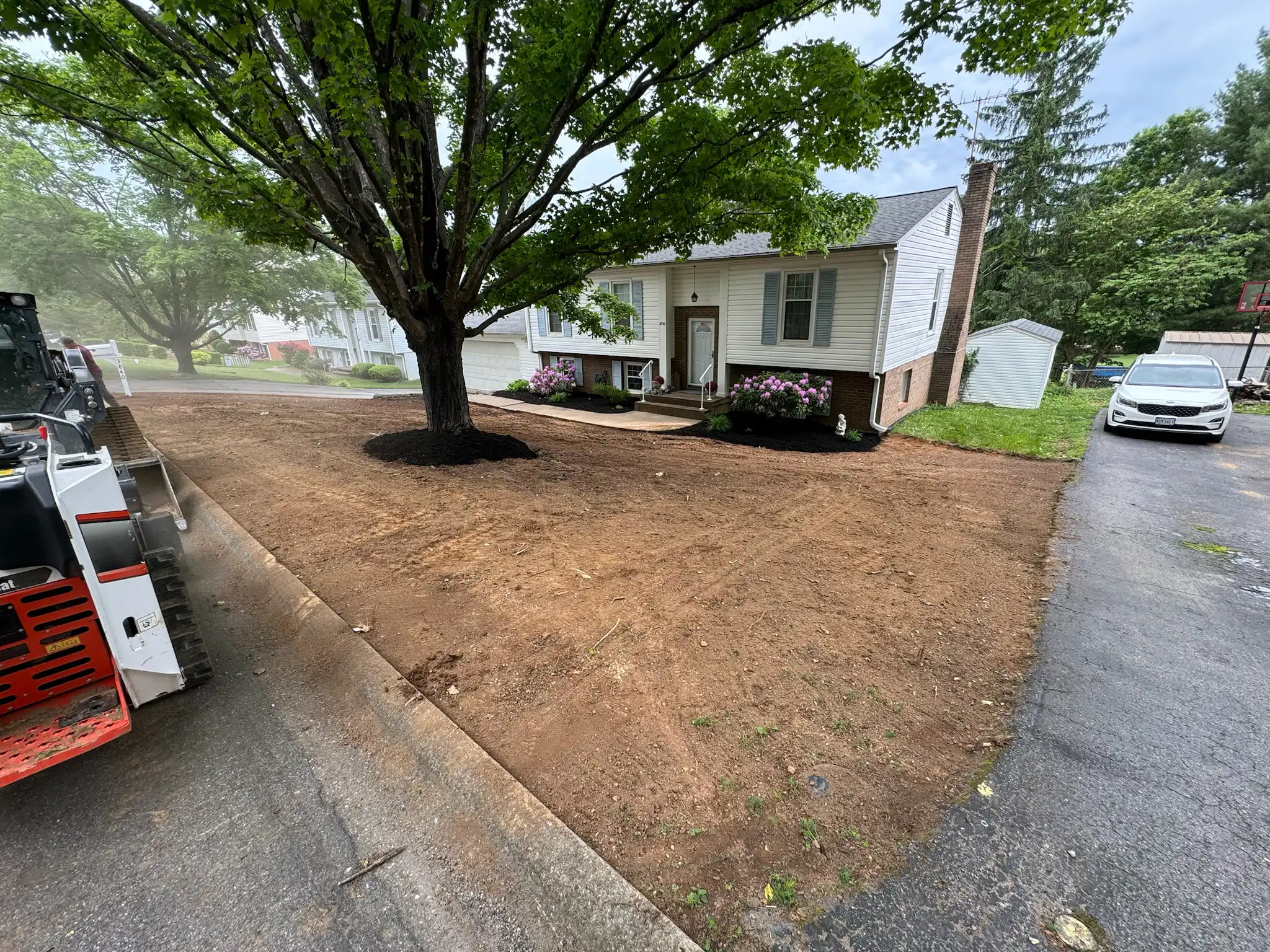
Finish Grading & Lot Leveling
Cave Spring, VA
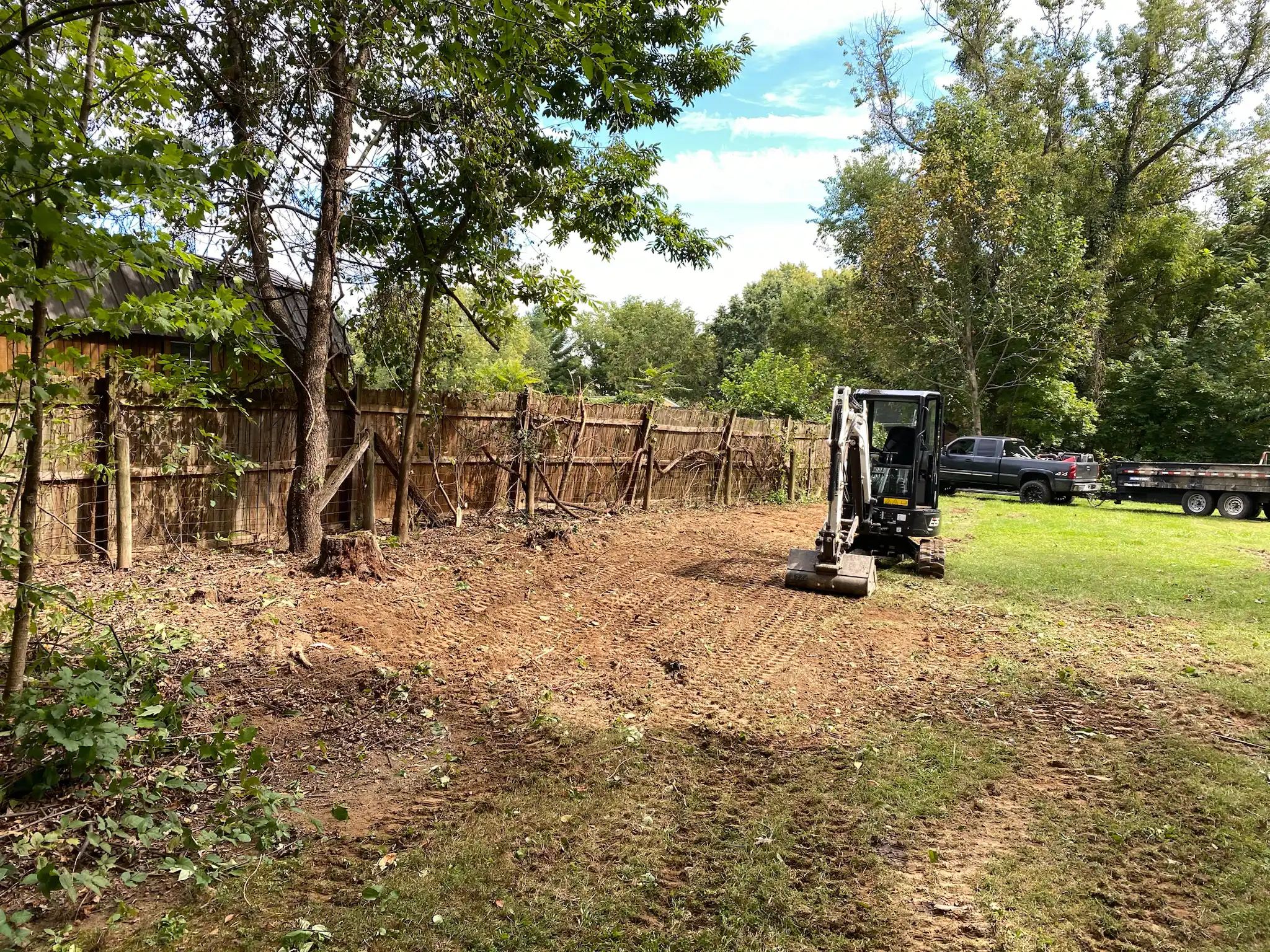
Yard Grading & Slope Correction
Garden City, VA
Get a grading estimate in Roanoke
Describe the problem — standing water, uneven yard, new construction prep — and we'll walk the property, shoot grades, and come back with a plan and a fixed-price scope.
Related services
Grading projects often include or lead into these related services.
Excavation & Site Work
Foundation digs, building pad excavation, and bulk earth removal that precedes grading on new construction sites.
Yard & Surface Drainage
French drains, swales, and catch basins that work with graded slopes to manage water on Roanoke's impermeable clay.
Driveways & Access
Driveway grading, gravel installation, and access road construction that depends on proper site grading for longevity.
Grading questions — Roanoke
Why does Roanoke's clay soil make grading so difficult? +
Roanoke sits on Cecil and Madison red clay series — heavy, dense soil with very low permeability. This clay expands 10-15% when saturated and shrinks when it dries out, creating a cycle of ground movement that undoes poorly executed grading work. The soil also holds water on the surface rather than letting it percolate, which means grading slopes need to be steeper than you'd need in sandy or loamy soil to actually move water away from structures. If you grade flat, water just sits.
What's the difference between grading on a valley floor lot vs. a hillside lot in Roanoke? +
Valley floor properties — like those in Raleigh Court or Garden City around 900 feet elevation — tend to be relatively flat but sit on deep clay with poor drainage. The challenge is creating enough slope to move water without importing large volumes of fill. Hillside lots — like those climbing toward Mill Mountain or in Cave Spring's newer subdivisions — drain naturally but require cut-and-fill balancing to create level building pads. The slopes also need stabilization to prevent the exposed clay from washing out during Roanoke's 42 inches of annual rainfall.
How long does a grading project take in Roanoke? +
A residential lot regrade typically takes 2-5 days of machine time, depending on the area being graded and how much material needs to move. Finish grading for new construction takes 1-3 days. The real variable in Roanoke is weather — clay can't be worked when it's saturated. If we get a week of rain in March or April, the site may need several dry days before the clay firms up enough to grade without rutting. We schedule around weather windows, especially in spring.
Do I need grading if my Roanoke home has standing water in the yard? +
Standing water usually means the existing grade is directing water toward a low spot instead of away from it — or there's no slope at all. In Raleigh Court and other older Roanoke neighborhoods, many yards were originally graded before modern drainage standards existed, and decades of settling have created depressions. Regrading to establish proper drainage slopes is often the most effective fix. In some cases it's combined with a French drain or swale to handle concentrated flow.
Does Roanoke County / City of Roanoke require permits for grading? +
Both jurisdictions require grading permits when you disturb more than 2,500 square feet of land area or when the work changes existing drainage patterns that affect neighboring properties. Smaller residential regrading projects — like correcting slope around a foundation or leveling a backyard — often fall below the threshold. If the grading is part of a larger building permit, it's typically included in that permit. We verify requirements during the site walk.